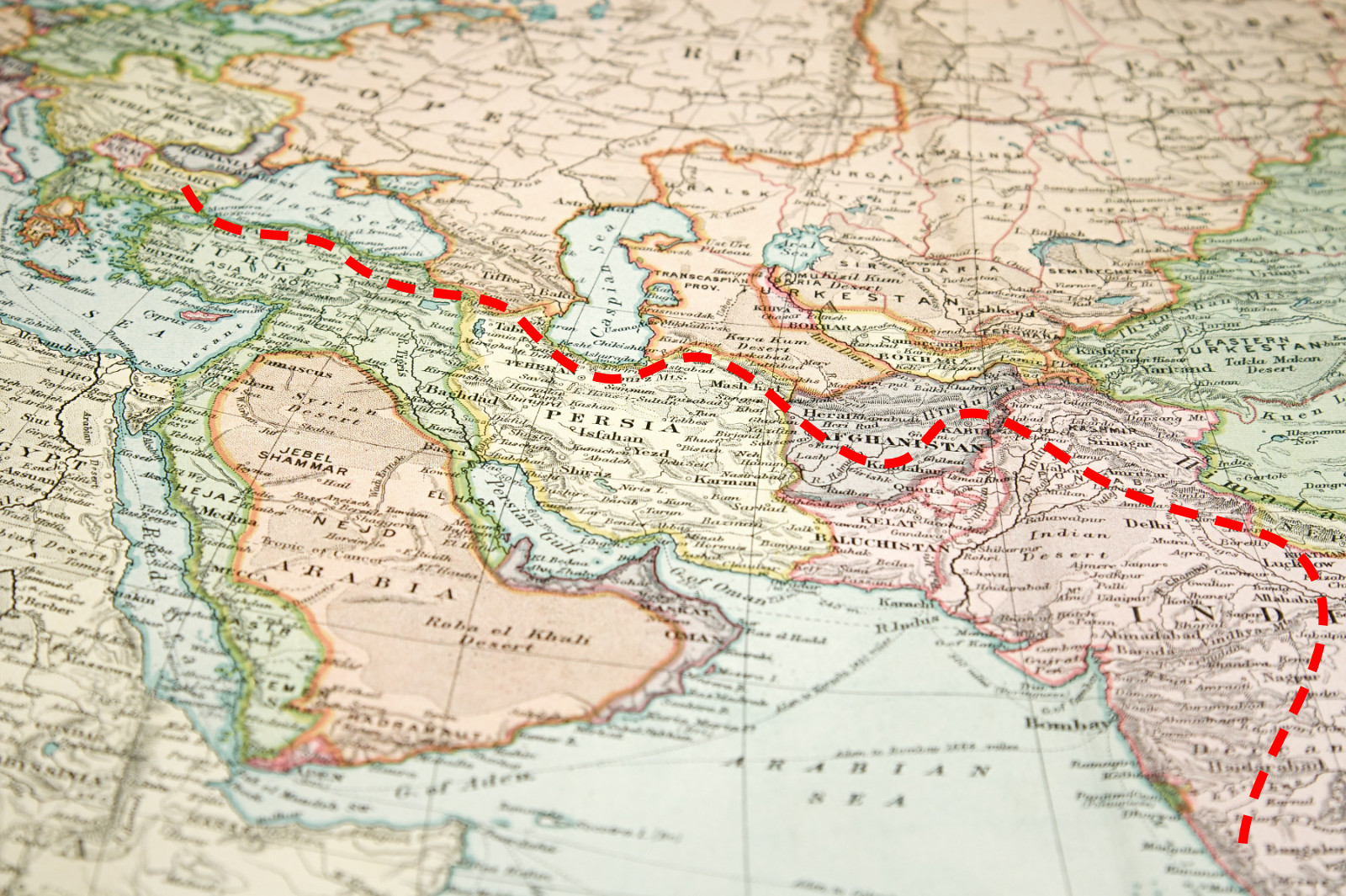
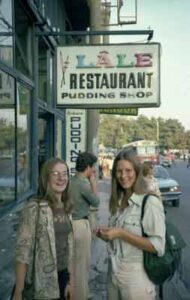
The Pudding Shop -- a tiny, open-fronted Istanbul patisserie -- was the first meeting point on the trail. After 1967, everyone stopped here to eat sweet baked rice pudding and honey-soaked baklava topped with green pistachios. Outside its door English double-deckers parked by the Blue Mosque. Pop music played in its garden. On its wall was the legendary notice board where kids traded travel advice, found the address of the Iranian Embassy and checked out the safest route through Afghanistan. 'Gentle deviant, 21, seeks guitar playing chick ready to set out for mystical East,' read one message. 'Anyone know where to crash in Kabul?' asked another. Here Paradise-bound freaks in Apache headbands and paisley waistcoats began their journey for India.
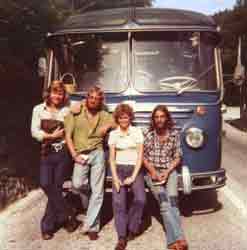
Throughout the late Sixties and Seventies, spirals of dust trailed away from Istanbul, kicked up not by nomadic traders' caravans but by Magic Buses and Hog Farm commune coaches. Ancient Austins and retired Royal Mail vans staggered onto the Silk Road. Born-again hearses were spurred east by Seekers in sandals. Mountain freaks leapt towards Himalaya in war surplus Jeeps. Banners fluttered from rear windows. Pop music tumbled out of open doors. Drivers called Screw and Wombat piloted rainbow-coloured Bedfords through one-mule hamlets. Aboard clapped-out Turkish coaches and converted London double-deckers these intrepid travellers lit sticks of incense and settled back on Habitat cushions, riding in the weirdest procession of unroadworthy vehicles ever to rattle and rock across the face of the earth.
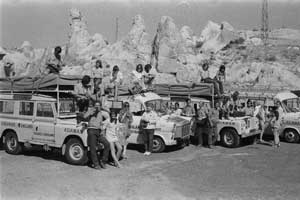
Along the road strangers struck up friendships, started (and ended) love affairs, planned how best to change the world. These 1972 photographs are of a group of Hughes Overland travellers near Cappadocia and, not far away at Hattusas, Tony Wheeler who -- at the end of his trip -- would found Lonely Planet.
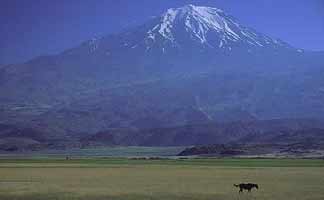
Dogubayazit -- called 'Doggy Biscuit' by Sixties Overlanders ? is a place of transition, within the borders of secular Turkey yet infused with Islamic fervour, on the border between the Ottoman and Persian worlds.
At dawn beneath the flanks of soaring, wide-mouthed Mount Ararat, the swallows rise up, connecting in their sweeping flights the mundane and mystical, the contiguous and the transient, the intolerant and the liberal. Here the Swiss traveller Nicolas Bouvier wrote movingly of time passing on the road in brewing tea, in shared cigarettes, in a journey's rare moments when intimacy borders on the divine. 'I dropped this wonderful moment into the bottom of my memory, like a sheet-anchor that one day I could draw up again,' he wrote in L'Usage du Monde. 'The bedrock of existence is not made up of the family, or work, or what others say and think of you, but of moments like this when you are exalted by a transcendent power that is more serene than love.'
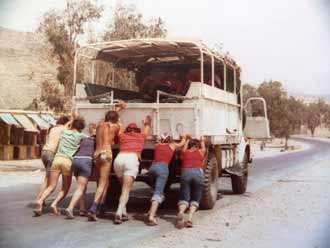
No one on the overland trail could remain a passenger for long. On the journey along the world?s wildest and oldest trail, the intrepid travellers lit sticks of incense, strummed their guitars and read another chapter of Siddhartha, then stepped off the vehicle to help push it over toward the Hindu Kush. None of them had travel insurance. No one had heard of Blackberrys, ATMs or AIDS. Nobody worried if the radiator blew out in Anatolia. This is Intertrek driver Chris Weeks? ex-British Army Bedford RL?
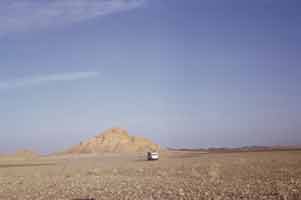
An Intertrek ex-British Army Bedford truck with 27 travellers aboard crossing Iran's Great Salt Desert in 110 degrees heat in 1972, and Jonathan Benyon?s British-registered Mercedes 032 bus the Silver Express - also occasionally called the Silver Slug - on the road to Nirvana.
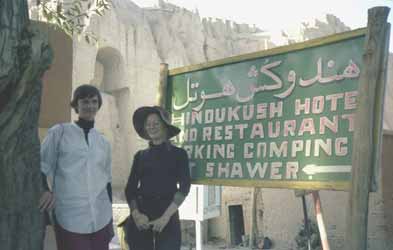
Two Australian travellers in front of one of the Bamiyan Buddhas in 1978. The Buddhas were destroyed by the Taliban in 2001.
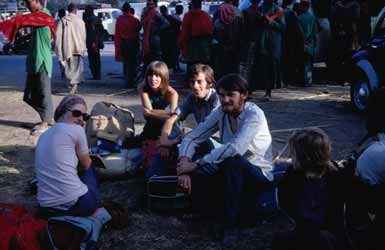
Tony and Maureen Wheeler (centre) travelling to India and Australia in 1972. When they arrived in Sydney they were penniless. 'I bet we could do a book,' Wheeler said, and in a month he wrote Across Asia on the Cheap -- the first Lonely Planet guide.
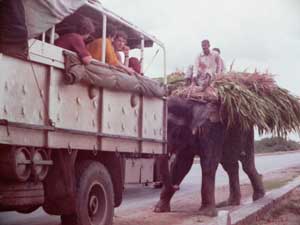
Tony and Maureen Wheeler (centre) travelling to India and Australia in 1972. When they arrived in Sydney they were penniless. 'I bet we could do a book,' Wheeler said, and in a month he wrote Across Asia on the Cheap -- the first Lonely Planet guide.
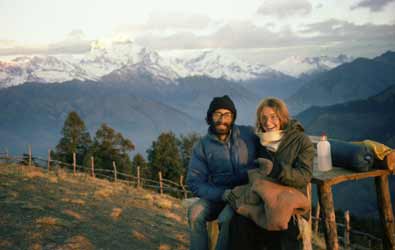
Australian Carol Matthews and Californian Curt Gibbs on Poon Hill in the Annapurna range in Nepal, and - on the right as photographed by Chris Weeks - Intertrek driver Bobby Hughes who said of those days, ?That was an exceptional time spent in exceptional places. The job was the best one I ever had in my life. We never could get bored: stroppy border guards, even stroppier Bedford trucks, and female passengers who let drivers get away with things only rock singers could!?. For many travellers, Nepal was considered the end of the road, a paradise where the Himalayas met the heavens.
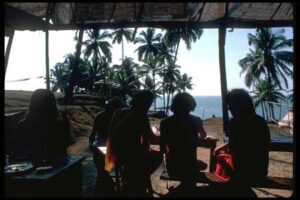
the end of the road beside the Indian Ocean. 'Ommm...'